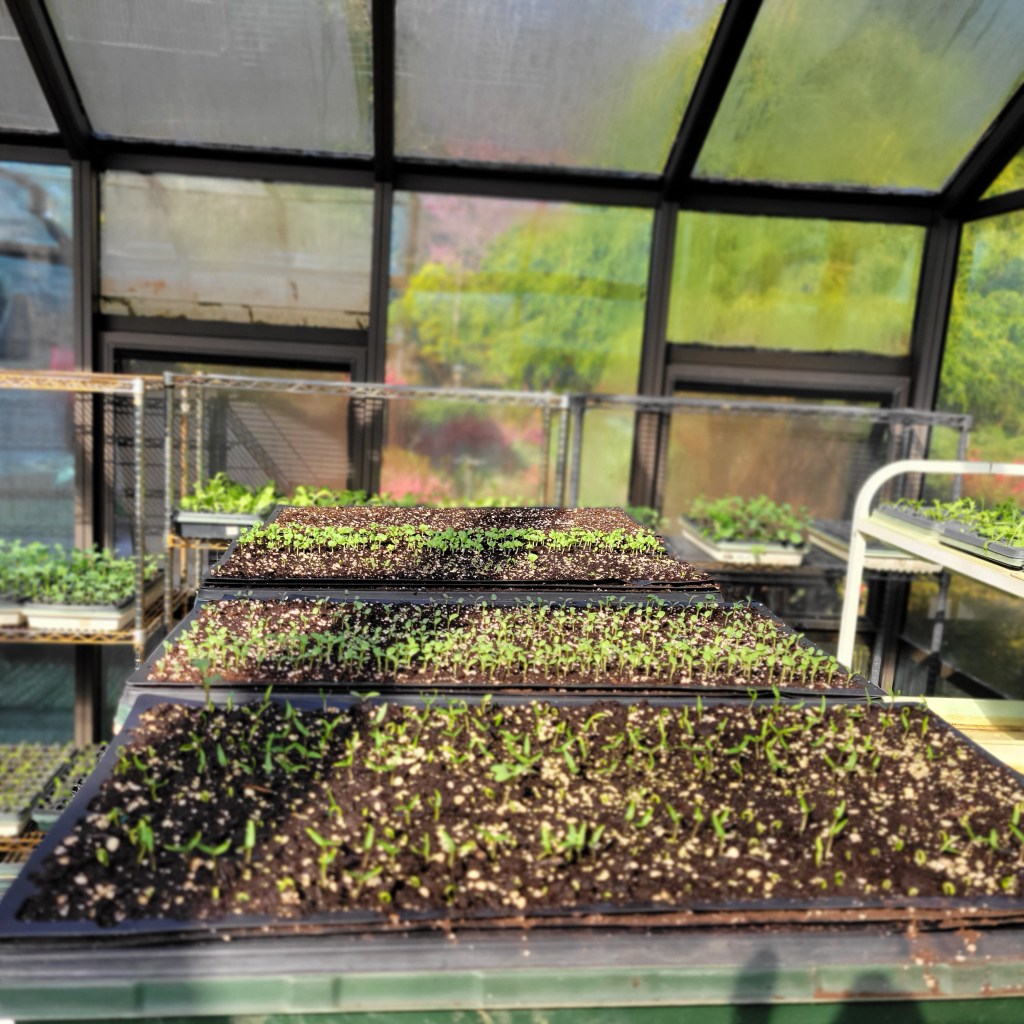
Typically on hears the phrase “the days are long, but the years are short” in regard to child rearing; however, it also applies to CSA farming. The greenhouse seedbed and transplanting stage is nearing an end as all of the spring crops are growing nicely and filling their individual peat pots. The nightshade veggies are the last to fill the seedbeds. Today those seeds are starting to break though the soil which means by the end of the week, I shall be transplanting the tomatoes, eggplant, and peppers into their individual peat pots. And then, except for monitoring and watering the plants located there, my daily greenhouse hours will have ended!
The first and now largest plants have left the greenhouse so they can get acclimated to the real world of direct sunshine, unregulated temperatures, wind, and rain. This means I must be careful when I back out of the garage! Robert put a small fence around this “nursery” to keep wandering animals from walking through and damaging the plants. These plants get watered every day. Once they have adjusted, they will go to the gardens to be transplanted for the final time into our field/garden soil.

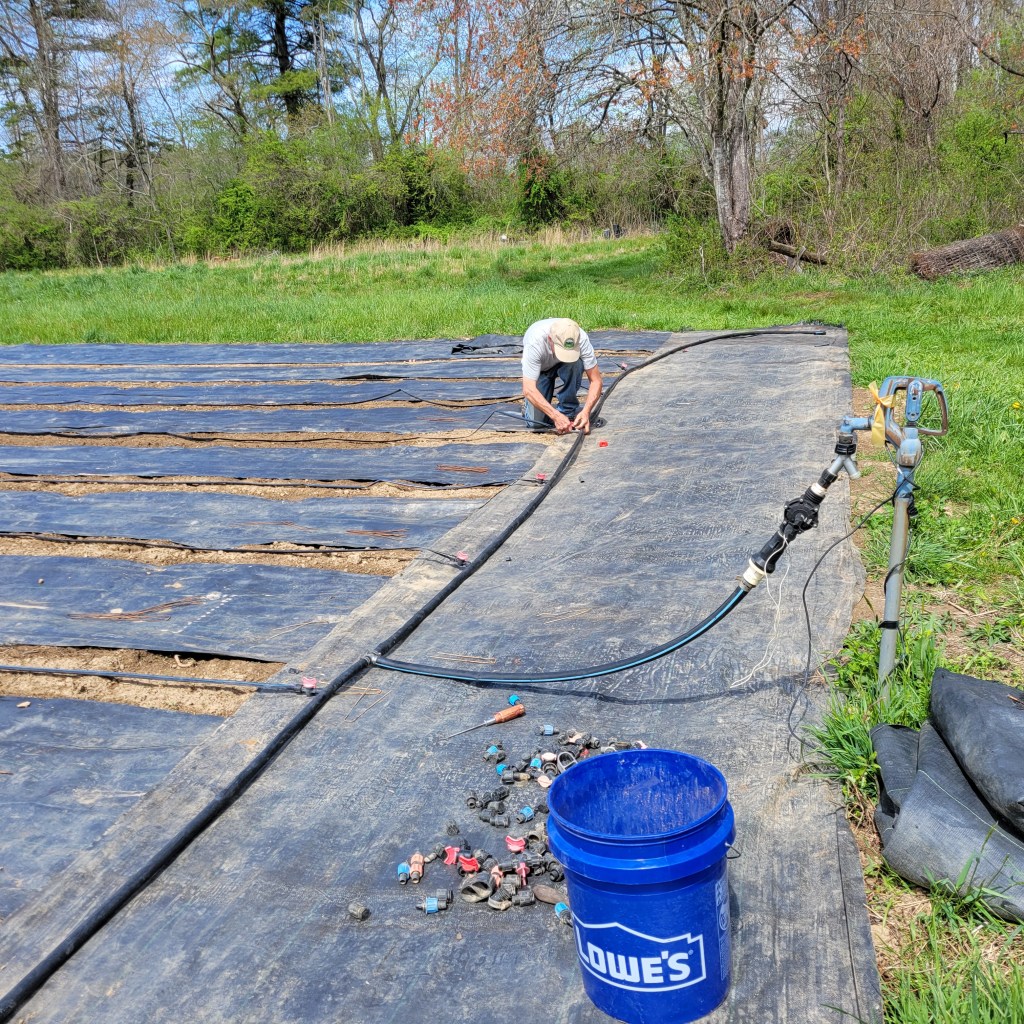
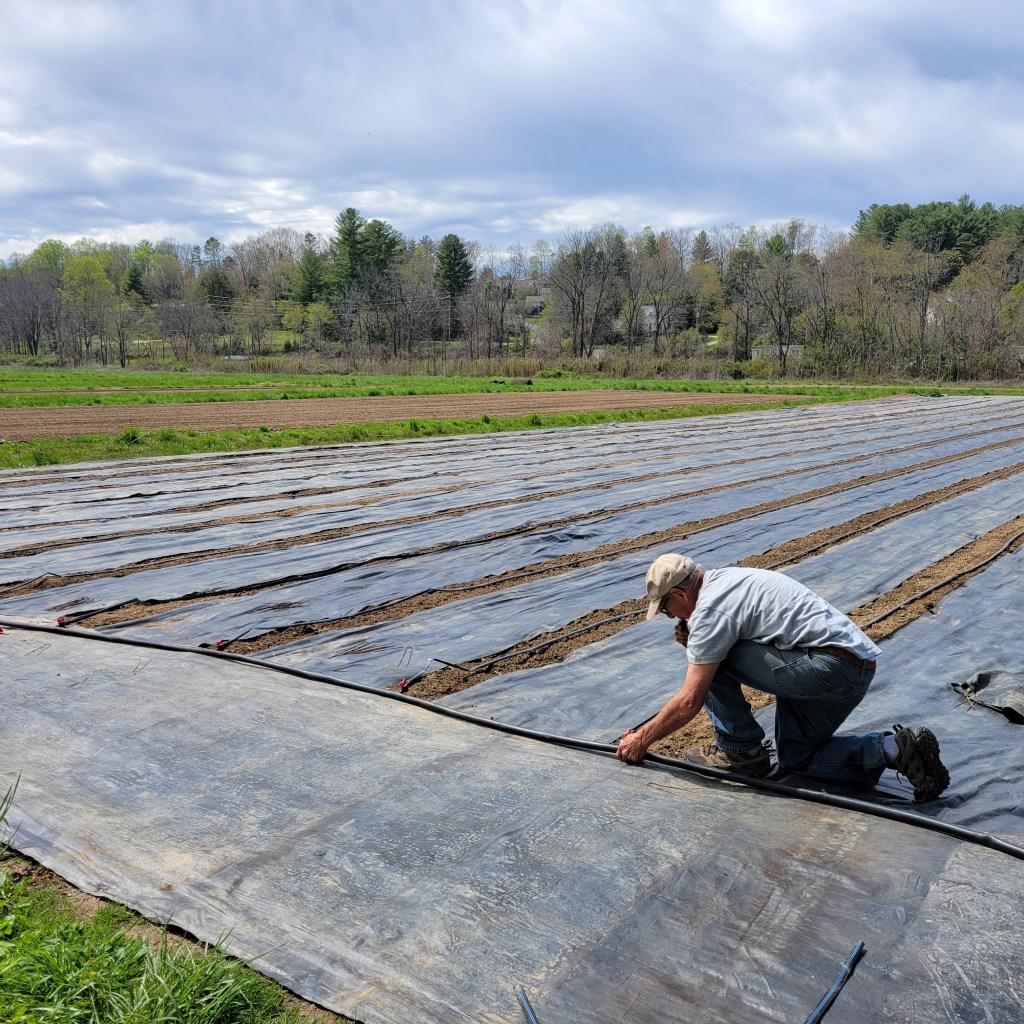
At the same time, the garden soil must be turned and fluffed. This step is done with our tractors. The remainder of the season is all really hard, manual labor. The ground covers between which we plant must be laid down. The drip irrigation lines must be laid as well. Only then can we begin putting our plants into the gardens. Robert is busy today preparing the gardens for the first joi choi, tatsoi, kale, lettuce, romaine, broccoli, cauliflower, kohlrabi, and cabbage transplants. We trust each plant will mature into a lovely, tasty vegetable to fill our early CSA Boxes.
Producing a veggie crop is a long and labor intensive process which begins the first of March. Each year when we start up our CSA Farmshare pick ups in mid-to late-May, we comment, “It will be the 4th of July before you know it!” And then it is!! Then the first of August arrives with its harvest of tomatoes, peppers, and eggplant. Typically, by this time, we have “hit the wall” in terms of our energy levels and need to rest and re-group. This is when we say, “The harvest season is halfway over.” Turn around a few times and the end of September has arrived and our supply of fresh produce is dwindling. Then, if all goes well, by the end of October or mid-November, the gardens will all be cleaned up and put to sleep for the winter months. One fact remains–the days are long and the year is short!
 Cane Creek Asparagus & Company CSA